

#INTRO
-Deba
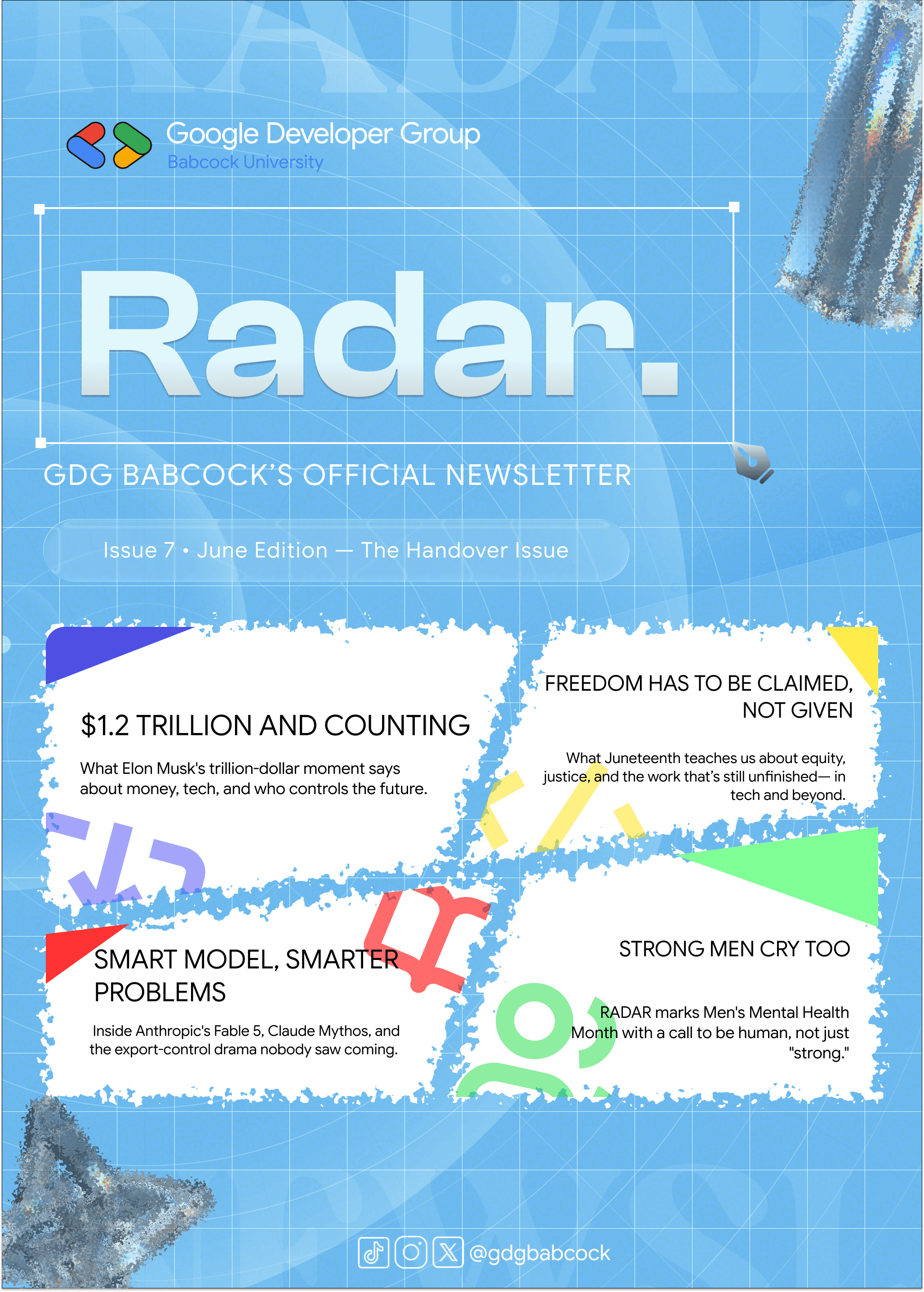
This month of May, we have dedicated a larger chunk of our time to appreciating each other. Globally, May is Mental Health Awareness Month. This month is specially set aside to bring awareness to the challenges we face every day, the battles we fight when there’s no one looking.
RADAR this month is here to remind you that you are not alone, we are all in this together!!
#Mental Health Awareness
-Deba
May is Mental Health Awareness Month.

Mental health is a really sensitive topic for me
Every year, hundreds of thousands of people die by suicide, and even more attempt to take their own lives. At some point, you begin to wonder: what exactly is going wrong? Why are so many people hurting this deeply?
The world is not really designed to take care of the mental well-being of its inhabitants. The constant runaround and struggle to stay afloat eventually take their toll on people, and sometimes we simply cannot handle all that pressure.
Pressure to be on track. Pressure to meet expectations. Pressure to stay happy, which is perhaps the heaviest pressure of all, because it demands that you smile through the weight.
And the scary part is that most of the time, you cannot even tell who is struggling. Some people have learned how to hide it so well that their pain becomes invisible. They show up every day, they laugh, they work, they reply to messages and still go home fighting battles nobody else can see.
We have become so used to surviving that sometimes we forget human beings are not machines. People get tired. People break. People need help.
Many times, people are not looking for solutions or motivational speeches. Sometimes they just want to feel understood. To feel like they are allowed to struggle without being seen as weak or ungrateful.
That’s why we have to learn to extend grace to people. We have to show love. We have to be careful that we are not adding to the weight someone else is already carrying.
How do we speak to each other? What kind of remarks do we make? How do we treat the people around us?
That little joke might be someone’s breaking point. Something said casually in passing could stay in a person’s mind for weeks, quietly eating away at their confidence.
And for those of us who may be struggling, remember that your presence matters more than you think. The world is better with you in it. The sun shines a little brighter because of you, and the earth keeps spinning for you, regardless of what you might think right now.
Even on the days when you feel invisible, exhausted, or overwhelmed, your life still carries value.
Please do not suffer in silence. Reach out when things begin to feel too heavy to carry alone. Talk to someone you trust, someone who can remind you that you do not have to face everything by yourself.
Most importantly, take care of yourself. Protect your peace where you can, and check in on yourself just as much as you check in on others. No matter how dark things may feel right now, there is still a future version of you that will be grateful you kept going.
#WHO DO YOU THINK YOU ARE? (IDENTITY CRISIS)
-Hafeez
Now Listening to COPING MECHANISM by OMAH LAY and ELMAH.
Now Listening to COPING MECHANISM by OMAH LAY and ELMAH.
This about to get really deep and to real.
Sometimes I wonder if people truly know themselves or if we’re just our counter part and becoming versions of ourselves created by survival, pressure, and expectations.
Identity Issues are deeper than insecurity. That feeling of slowly becoming disconnected from yourself while trying to fit into different spaces, expectations from different people, along multiple versions created by society. One personality for family, another for friends, another online, until you start to ask yourself who you are every night.
Sometimes I wonder if people truly know themselves or if we’re just our counter part and becoming versions of ourselves created by survival, pressure, and expectations.
Identity Issues are deeper than insecurity. That feeling of slowly becoming disconnected from yourself while trying to fit into different spaces, expectations from different people, along multiple versions created by society. One personality for family, another for friends, another online, until you start to ask yourself who you are every night.
My generation is constantly pressured to become something: Successful, attractive, and relevant.
Social media biggest Opps ever, everyone’s enemy / blessings. Well for me it’s my biggest enemy because everyone is performing to show their other side online. People begin to seek validation from others (strangers apparently) and that slowly makes them lose their self in the process.
Social media biggest Opps ever, everyone’s enemy / blessings. Well for me it’s my biggest enemy because everyone is performing to show their other side online. People begin to seek validation from others (strangers apparently) and that slowly makes them lose their self in the process.
Pain, another big brother. It redefines identity. Rejection, failure, heartbreak, and pressure can make people change themselves by what they went through instead of who they truly are.
At some point, everybody asks themselves silently one uncomfortable question once in a while.
Who am i?
Who are you?
Are we truly ourselves, or just souls shaped by what we go through?
Are we healing or just hiding pain we never grew through?
Are we living for ourselves or chasing validation from people we barely knew?
Are we really free thinkers, or just becoming everything society told us to?
Cause somewhere between pressure, pain, and trying to survive,
We slowly lost the original versions of ourselves inside.
At some point, everybody asks themselves silently one uncomfortable question once in a while.
Who am i?
Who are you?
Are we truly ourselves, or just souls shaped by what we go through?
Are we healing or just hiding pain we never grew through?
Are we living for ourselves or chasing validation from people we barely knew?
Are we really free thinkers, or just becoming everything society told us to?
Cause somewhere between pressure, pain, and trying to survive,
We slowly lost the original versions of ourselves inside.
#Lock In
-Iyi

When coding gets hard, sometimes we reach for a snack. A drink. We talk to our rubber duck, our preferred AI assistant, a friend. Or we take an (often well-deserved) rest.
These are coping mechanisms. Small ones. Mostly harmless.
But the question underneath all of them is the same: what do we do when the drive runs out?
Drive
What does it mean to be motivated? To lock in.
We are most motivated (and most willing) to do a task when there is an anticipation of reward. That anticipation triggers a dopamine release in the brain. The same feeling from a really good meal. A video that hits right. When a solution clicks, when we finally "get it."
Dopamine is not the reward itself. It is what makes us want it.
To understand depression and addiction, we first have to understand motivation. Because more often than not, both stem from the same root: the absence of that wanting, and the need to fill the gap it leaves.
Stimulation vs Motivation
There is a thin line between the two.
This is why many of us listen to music while coding. Why energy drinks are a personality. Why do some reach for substances, or some mixture of the three? The brain is looking for the signal. It does not always care where it comes from.
Stimulation is immediate. It makes us feel something now.
Motivation is directional. It makes us move toward something.
The two can look identical from the outside. Sometimes from the inside too.
The Signs
What is the best thing to do when we notice a friend or family member slipping?
First: knowing what to look for.
More sleeping. Not rest. The kind used to avoid the day, or to move through it faster. Less concern for responsibilities. What might look (only in hindsight) like misplaced priorities. A sudden, stronger pull toward fun over function.
This is a thin line, too.
Because sometimes those "misplaced priorities" are not the result of depression or addiction. They are the response to it. The distraction was chosen over sitting with the discomfort.
The difference matters. Judgment rarely helps here. Showing up usually does.
What I Know About Recovery
Rehabilitation programmes offer the environment for what I would call "external abstinence."
I know this from the inside. I spent time at Aro.
The structure is there. The classes. The counselling. The (AA) meetings. The teachings. And yet, looking back, something was missing.
I never really sat with my own thoughts.
I was part of a programme. I consciously (and subconsciously) agreed to behave in ways that would get me left to myself (my own devices). There was a quiet performance happening. Of recovery. Of readiness.
And while drug use among recoverees was acknowledged and talked against, the conversation still happened. Among housemates. In passing. The focus stayed on the external: staying off the substance, not on understanding the thinking patterns that led there.
Perhaps more could be done. No more mandatory responses. Not more structured AA formats that tend to produce shallow, rehearsed answers. But slower, more open conversation. Self-paced. Given room to actually go somewhere real.
After about three months and three weeks, I recall very little from those interactions.
What I remember: the serenity prayer. Said daily. Said by routine.
Some things are said long before they are understood.
God, grant me the serenity
to accept the things I cannot change,
courage to change the things I can,
and wisdom to know the difference.
It’s Mental Health Month. Let's check on our People. Let's check on Ourselves.
#WHEN BILLIONAIRES FIGHT: The Trial That Could Have Changed AI Forever
#Musk v. Altman: A Full Breakdown of Silicon Valley's Most Dramatic Legal Battle
-Tejiri

I'll admit, before I started this article, when the RADAR team lead, Deba, had asked us to write on relevant tech events happening in the world, I wasn't expecting this exact piece I was about to drop. Truth be told, I'm one of those people who catch on to news slow, not because I like being ignorant, but because I don’t just see stuff like this pop up in my algorithm (yeah, it’s still not an excuse, I know). But after the deep dive I went through searching for news, I've made a promise to myself to find a way to be up-to-date on things happening around me.
So here it is: two billionaires doing what most rich people are stereotypically known for, greedily fighting for more power, more money, and world domination. (I kid you not, I really wished I was exaggerating.)
A Little Background: Who Are These Guys, Even?
If you've used ChatGPT, you know Sam Altman. He's the CEO of OpenAI, the company behind the most popular AI chatbot on the planet, used by over 900 million people every week.
Then there's Elon Musk. Owner of Tesla, SpaceX, and X (formerly Twitter). A man who once offered to buy OpenAI for $9.74 billion and got turned down with a two-word reply: "No, thank you."
He's also the guy who once tweeted that he'd put a chip in your brain, launched a car into space for fun, and recently admitted in court that his own AI product was trained using his competitor's technology. A lot is going on.
What most people don't know is that these two men didn't start as enemies. They started as partners, building something together that they both genuinely believed could save the world.
And that is exactly what makes this story so interesting.
ACT ONE: The Dream

December 2015: San Francisco
In Silicon Valley, 2015 was the year the AI alarm bells started going off. Google had quietly acquired DeepMind, Facebook was building its own AI lab, and the race to build the world's most powerful artificial intelligence was on, and it was entirely in the hands of corporations chasing profit.
A group of researchers, entrepreneurs, and futurists found this deeply unsettling. Among them: Elon Musk, Sam Altman, Ilya Sutskever, Greg Brockman, and several others. Their shared fear was pointed: what happens when the most powerful AI ever built is owned by one company, or one person, with no obligation to anyone but their shareholders?
So they did something unusual. They built a lab and deliberately made it a nonprofit.
In December 2015, OpenAI was officially founded—not to make money, but to develop artificial intelligence "for the benefit of humanity." The mission was baked into the legal structure. No single person could own it, and no investor could extract profit from it. Whatever they built was supposed to belong, in spirit at least, to everyone.
Musk pledged funds, Altman pledged his time, and others pledged both. Together, they raised $1 billion in commitments and set out to build a counterweight to the AI giants they feared.
On the stand in court, years later, Musk described his mindset at the time simply: he said he cofounded OpenAI to create "a counterbalance to Google"— because when he once asked Google's Larry Page what happens if AI tries to wipe out humanity, Page's answer was essentially: that's fine, as long as AI survives. And Musk was horrified. He called his worst-case scenario "a Terminator situation where AI kills us all."
Dramatic? Yes. Sincere? Also yes. At least in 2015.
ACT TWO: The Cracks
2017–2019: The Breakup Nobody Talks About
Here's the thing about building a nonprofit AI lab: it is astronomically expensive. Training the kind of AI models that could compete with Google requires billions in computing power, the world's best researchers, and infrastructure that no charity can fund.
By 2017, it was clear that the pure nonprofit model had a huge hole, and that hole was going to kill OpenAI's ambitions long before they achieved them.
And the only solution was to create a for-profit arm. Bring in real investment, keep the nonprofit mission alive, but attach a money-making engine to it.
It sounds reasonable. But this is where Musk and the rest of the team stopped seeing eye to eye.
OpenAI's own records, published and presented in court, tell a story that paints Musk in a complicated light. According to internal communications revealed during the trial, Musk didn't simply oppose a for-profit structure. He wanted control of it, and he pushed to merge OpenAI into Tesla. He proposed a structure where he would hold the majority equity. In September 2017, he even incorporated a public benefit corporation, a for-profit entity, as his proposed future structure for OpenAI. The very thing he would later sue over, he had quietly tried to build for himself.
When the rest of the team rejected his terms, stating plainly that giving him unilateral absolute control over the AGI (Artificial General Intelligence is a theoretical form of AI that can match or exceed human cognitive abilities across virtually any intellectual task),” was incompatible with the mission, Musk walked. In February 2018, he resigned from the board. His parting message to the team was blunt: "Discussions are over."
(You have to appreciate the irony of a man who allegedly wanted to control OpenAI for himself later suing OpenAI for… trying to control itself, but check out the full gist here: https://openai.com/index/elon-musk-wanted-an-openai-for-profit/)
By March 2019, OpenAI officially launched its for-profit arm that could take investment, while the nonprofit retained oversight. In 2023, Microsoft poured $10 billion into it.
When Musk heard about the Microsoft deal, he texted Altman directly: "What the hell is going on? This is a bait and switch."
Altman's reply, whatever it was, wasn't enough.
ACT THREE: The Rival and the Lawsuit
2023–2024: Now It's Personal
In March 2023, Elon Musk founded xAI—his own artificial intelligence company. He was no longer a scorned ex-partner watching from the sidelines but now a competitor. And a motivated one at that.
Then in February 2024, Musk filed his first lawsuit against OpenAI and Sam Altman, accusing them of betraying the nonprofit mission he helped build. He claimed the for-profit conversion was a breach of the original founding agreement and that the billions poured into OpenAI had been donated under an implicit promise that it would never become a vehicle for private profit.
He wanted:
- Altman and Brockman were fired and removed from OpenAI
- The entire for-profit structure was dismantled
- Up to $150 billion in damages paid back to OpenAI's nonprofit foundation
- And Microsoft, which he also named as a defendant to be held liable for helping it all happen
OpenAI's response was swift and sharp. They countersued in April 2024, calling Musk's actions "bad-faith tactics" designed to slow the company's progress and redirect its innovations for his own benefit. They published internal communications showing Musk had supported a for-profit structure as long as he was in charge of it. The narrative was clear: this wasn't a principled stand for AI safety. It was a business rival trying to use the court to cripple a competitor.
In January 2026, Musk posted on X about the upcoming trial: "Can't wait to start the trial. The discovery and testimony will blow your mind."
Very bold words.
ACT FOUR: The Courtroom
April–May 2026: Oakland, California
The trial opened in late April 2026 at the federal courthouse in Oakland, California. Armies of lawyers. Boxes of evidence. A handful of anti-AI protesters are outside. And at the centre of it all: two of the most powerful men in technology, facing each other across a courtroom.
MUSK ON THE STAND
When Musk took the stand, he told the jury he had been deceived. "I was a fool," he said, "who provided them free funding to create a startup." He reminded the court that he gave $38 million over several years to help launch what became an $800 billion company. Not a great return if your goal was control.
He argued passionately about AI safety. He warned, again, about a Terminator-style apocalypse. He painted himself as a lonely voice for responsibility in a world of profit-hungry tech executives.
Then his cross-examination began, and things got messy.
OpenAI's lead lawyer, William Savitt (who had, in a wonderful twist, previously represented Musk himself during Tesla battles), came in swinging. He surfaced an email Musk sent in 2017 after poaching a founding OpenAI researcher named Andrej Karpathy to work at Tesla. Musk had written to a Tesla executive: "The OpenAI guys are gonna want to kill me."
He also revealed that Musk had tried to fold OpenAI into Tesla as far back as 2018.
And then, the gasp moment. Musk admitted on the stand that his own AI chatbot, Grok, had been trained in part using OpenAI's models. The man suing OpenAI for betraying its mission had been quietly using OpenAI's work to build his competing product. The courtroom was stunned. Musk was combative throughout, and he accused the opposing lawyer of lying and asking trick questions. Voices were raised, and it was not a good look.
ALTMAN ON THE STAND
Sam Altman came to court on May 12, 2026, and presented a sharp contrast.
Where Musk was combative, Altman was composed. Where Musk raised his voice, Altman kept his measured. He seemed nervous at the start—understandably so, with Musk's lawyer Steve Molo clearly trying to dismantle his credibility from the first question.
Molo read aloud a text Altman had sent Musk in February 2023: "I'm tremendously thankful for everything you've done to help. I don't think OpenAI would have happened without you."
Molo asked if he'd changed his view.
Altman paused. "I have changed my view on Elon significantly," he said.
When pressed further on whether he tells people what they want to hear, Altman pushed back: "No. I have complicated feelings about Elon."
For OpenAI's part, their defence was grounded and consistent: Musk's early donations came with no strings attached, meaning there was no charitable trust to enforce. The for-profit structure had been necessary to compete and to survive. And critically, providing ChatGPT to hundreds of millions of people for free was itself the mission. AI for all of humanity, not just the people who can pay.
Microsoft CEO Satya Nadella also testified, with Microsoft's lawyers arguing the company had no knowledge of any supposed breach of trust and could not have participated in it.
THE CLOSING ARGUMENTS
May 14, 2026
After weeks of testimony, both sides made their final arguments to the nine-person jury—six women and three men on Thursday, May 14, 2026.
Musk's lawyers: OpenAI had stolen a charity. They had taken a nonprofit built on donated idealism, stripped it for parts, and handed the spoils to Microsoft and Silicon Valley insiders.
OpenAI's lawyers: Musk wanted control. When he didn't get it, he walked away, built a rival company, and then sued his competitor using the very nonprofit mission he himself had tried to monetise.
ACT FIVE: THE VERDICT
May 18, 2026: 10:23 AM Pacific Time
The jury dismissed every single one of Musk's claims.
Not because OpenAI was innocent. Not because the court decided the mission hadn't been betrayed. The jury ruled that Musk had waited too long to sue and that he was aware of the actions he was complaining about years before he filed in 2024, and therefore, his claims had expired under the statute of limitations.
Musk posted on X within hours: "A calendar technicality." His attorney was more combative: "The war is not over." An appeal was immediately announced.
SO WHAT DOES THIS ALL MEAN?
Let's take a step back first.
On the surface, this was a lawsuit about whether OpenAI broke a promise. But dig deeper, and you find something far bigger; a question that this trial raised loudly and then left completely unanswered.
Who should own AI?
OpenAI is now valued at close to $1 trillion. It is preparing for a stock market debut that could make it one of the most valuable companies in human history. The tool that hundreds of millions of students, writers, doctors, programmers, and curious people use every single day was built by a nonprofit and is now being sold to investors.
Musk, for all his dramatic courtroom performances and transparent competitive motives, wasn't entirely wrong about the question he was asking. When a technology this powerful is converted into a for-profit machine, the incentives change. The pressure to grow revenue, please investors, and hit quarterly targets doesn't always point in the same direction as "benefit all of humanity."
And yet OpenAI's counter-argument is not without merit because building frontier AI costs tens of billions of dollars. A nonprofit cannot raise that money. If they had stayed purely charitable, there would be no ChatGPT. And in effect, there would be no free access for the student in Lagos who uses it to study, or the developer in Ibadan who builds with it.
Altman's argument that giving the product away free is the mission–is actually valid.
The uncomfortable truth this trial revealed to me is that both men arrived at this fight with dirty hands. Musk wanted control and left when he couldn't have it. Altman built something extraordinary and then sold equity in it to the highest bidder. Neither version of this story is heroic.
THE REAL VERDICT
The jury in Oakland delivered its ruling on May 18, 2026. But the real verdict, the one that actually matters, is still being written.
It will be written by regulators deciding whether AI companies should be allowed to operate without oversight. By governments asking who gets to define what "benefit to humanity" actually means. By the billions of ordinary people across the world who use these tools every day, mostly unaware that the technology shaping their lives was built in a boardroom fight between two billionaires who couldn't agree on who deserved to be in charge.
Here is what every young person in tech, every developer, every builder, every student at a community like GDG Babcock should take away from this:
The people building the future are not always building it for you. Sometimes they are building it for themselves, and the mission statement is just the packaging.
The question is not whether AI will change the world. It already is. The question is whether the people most affected by that change, people like us, in Nigeria, across Africa and throughout the Global South, where these companies have no headquarters and no accountability, will have any say in how it's built, what it's used for, and who it ultimately serves.
Musk and Altman will both be fine. They always are.
The rest of us? We'd better start paying attention.
Once massive amounts of money become involved, priorities change. What begins as a mission-driven nonprofit focused on “AI for humanity” can quickly evolve into a billion-dollar corporation focused on satisfying investors, increasing market dominance, and maximising profit, sometimes at the expense of the very people these technologies affect.
Since OpenAI transitioned toward a for-profit structure, multiple concerns around AI safety, oversight, and ethical responsibility have continued to surface. There have even been reported cases where chatbot interactions were linked to tragic incidents involving suicide and violence.
If you want to read more about that, you can check this out: https://en.wikipedia.org/wiki/Deaths_linked_to_chatbots
And no, I’m not saying ChatGPT is directly responsible for those deaths.
But that’s not the point.
The real concern is this: where exactly is the line drawn? At what point does accountability come in? Who decides what level of risk is acceptable before deployment? And what happens when organisations choose speed, competition, and profit over proper safeguards?
The tools you use every day: ChatGPT, Grok, Gemini— exist because of decisions made in rooms you'll never be in, by people you'll never meet. The Musk v. Altman trial just pulled back the curtain on how messy, political, and very human the future of AI actually is.
Because if history has taught us anything, it’s that when powerful technologies emerge without adequate oversight, the people with the least power often bear the greatest consequences.
Sources: CNBC, NPR, MIT Technology Review, TechCrunch, OpenAI official statements, Wikipedia
#Mental Health
-Andrea Andy
You imagine I’d be the one to speak to you about mental health?
Well, you thought wrong.
Now you probably are questioning where I’m going with this.
Let me put this simply: I need help too.
I took an interest in writing this paper because if you’re going batshit loco, I am right beside you. And just like Santan had said (if you listen to him), “we’re all alone in this together.” In a piece I’d written a while back, I affirm to you, I understand you because I see you in a way no one has seen me.
I hope that as you read this, you feel like someone understands you truly, because I do.
I won’t recount all the emotions you’ve had to journey through, as I also know that might not be where you want to be right now.
I do hope you read this paper and find it as an escape, something comforting and helpful.
You have probably heard these things before, but let me repeat them.
- Breathe. It is as it is now because you’re destined for something greater than you can imagine. This is your story, write it however you please.
- Your peace and joy are what matter.
- The world is full of noise and poison. Be careful what you let in.
- Go to the gym. Exercise for you and not for public perception.
- Eat your fruits. Drink water.
- It matters less if you’re 85 years of age (which you’re not); allow yourself to just be a kid. You have one life to live, and you should do so fully.
- Get a pet, if you can.
- Disconnect from things that drain you.
- Read Books.
- Pray.
“I will see you when I see you.”
There you have it.
I just put out on my school’s GDG blog the lines that changed so much about my life.
I refuse to go into details, but this is my way of affirming to you that I truly do understand you when you say an action or actions, a word or words from a person or people have altered your present reality.
I might not wear your shoes, but it makes sense to me still how that thing has probably troubled you this much.
See this, let’s look at life like a wine glass, you sterilize and it’s shiny and new again for a fresh pour. It doesn’t mean the history of fingerprints or lipstick stains on it before was instantly cancelled out from life’s files — you just can’t see it no more. You’ve just allowed it to be ready for a fresh pour. Again, it still doesn’t cancel out that it is going to be touched again and left with fingerprints and new lip stains.
It just means you’ve opened it to a system that keeps it valuable through maintenance in the long run.
Your trauma does not define you. It shouldn’t stop you or break you.
On the contrary, it should make you more valuable; they are the things that help shape you.
Wine ages with time — years of experience make it taste the best.
Cognacs, locked in a barrel. They tell you one is V.S, another V.S.O.P and one is the XO. You know what it tells you??
Everything is better with time.
Well, as long as you allow it.
I hope this helps, even if only a tiny bit.
Let me put this out there: this piece is in no way to romanticise your suffering or pain. It is for you to see strength in whatever journey you’re on.
Till we meet again… Happy mental health month.
Take care of yourself and check up on your friends.
#
HITTING ROCK BOTTOM
-Tayo

I know what it feels like.
You wake up the next day, realising you’d cried yourself to sleep. Or maybe you didn’t. Maybe you simply didn’t sleep. You wonder what the point of getting up in the morning is. As you brush your teeth, the memories of those damned moments resurface. Your gut wrenches. Your own skin feels like an abomination. You bathe in water a degree Celsius away from burning you. You wish the heat would burn away your problems, your mistakes, your reality. Outside the bathroom, you wish you’d slipped and fallen. You wonder how it would feel to stop breathing.
I know what it feels like.
I know what it’s like to feel hopeless and not want to try anymore. I’ve let the darkest parts of my mind put my sanity under lock and key. I’ve watched my life crash around me and carry that pain quietly. I know what it is like to laugh at jokes and wear a big old smile when really, you’d want nothing more than to scream. I have wished terrible things for myself. I have been utterly miserable in my life. But I want to tell you something someone I love once told me.
You wake up the next day, realising you’d cried yourself to sleep. Or maybe you didn’t. Maybe you simply didn’t sleep. You wonder what the point of getting up in the morning is. As you brush your teeth, the memories of those damned moments resurface. Your gut wrenches. Your own skin feels like an abomination. You bathe in water a degree Celsius away from burning you. You wish the heat would burn away your problems, your mistakes, your reality. Outside the bathroom, you wish you’d slipped and fallen. You wonder how it would feel to stop breathing.
I know what it feels like.
I know what it’s like to feel hopeless and not want to try anymore. I’ve let the darkest parts of my mind put my sanity under lock and key. I’ve watched my life crash around me and carry that pain quietly. I know what it is like to laugh at jokes and wear a big old smile when really, you’d want nothing more than to scream. I have wished terrible things for myself. I have been utterly miserable in my life. But I want to tell you something someone I love once told me.
“HAPPINESS IS A CHOICE.”
She told me this many times in my darkest years. Now I appreciate the repetition because I didn’t understand it the first time. Not really. Not the way I do now. Writing this, I remembered a song, and in the outro, the singer said,
“JOY IS NOT A FEELING. IT’S A WAY OF LIFE.”
On a drive with my mum, I complained to her that life was too complex. She told me that even the car we were in is complex. The human body is complex. Human behaviour is complex. She said life was simply complexities upon complexities, and getting through it is by trial and error.
“Even doctors do trial and error on their patients,” she said.
And I thought for the rest of that ride how you couldn’t really blame a doctor who isn’t able to save a patient. Especially if it’s their first time. They work with the knowledge they possess at that time. And as they progress in their career, they get better. So with that logic, why on earth do we expect ourselves to get it right all the time?
IT’S YOUR FIRST TIME LIVING TOO.
These days, I look at my life like an experiment, and I’m a scientist. I won’t give up because I didn’t get the outcome I wanted. I’ll pick myself up, learn my errors, and draft another hypothesis. Trial and error.
We’ve become so scared of failure, but it has a purpose: education. The real tragedy is being so consumed by the loss we face that we miss the lesson in all of it, which, when applied, will inevitably carve the way to better living.
These days, I think about my joy like a treasure in a treasure chest. And I’m the key. No one can open it up and give it away other than me. People like to say whoever can get you angry can control you, and I think it’s because we give them access. We decided what makes us open up the chest and throw our treasure out. We attach our happiness to possessions and people. So when things don’t go the way we plan, we lose our joy. Or we throw it away.
Over the years, I realised that if I was going to survive and thrive in this thing called life, I needed to protect that chest with everything. I stopped being petty and obsessing over the little things. God crafted me a lens so I would always see the bigger picture. So I would always know what truly matters and know that I’m already loved in all of it.
Do I always use this lens?
No.
But remember! Trial and error. I use it more than I did before. That’s something.
Do I still throw away my joy?
No. Not really.
It’s allowed to be sad. It’s allowed to cry. But despite all of that, I always have a lingering knowing that everything will be fine. I know that I will smile again. I know that I will laugh again. I know I will be happy again. And with that, my chest stays shut.
I let myself be happy over little things. I choose to keep being happy. I choose to try again. I choose to smile again.
I wouldn’t be doing you justice if I didn’t give more lyrics…
“JOY IS MY STRENGTH OF TRUSTING IN GOD.
JOY IS NOT A FEELING. IT’S A WAY OF LIFE.
I KNOW MY HOLY FATHER WILL NEVER GIVE MORE THAN I CAN BEAR.”
I hope that means something to you. I hope you realise there is strength for you in Christ. I hope you get up no matter how many times you fall. I hope you know you’re not in this alone. I hope you chase joy, and purpose, and peace, and happiness. And if you can’t find that, I pray you find God. Because He will give you all those things and more.
Take care of yourself, human. If you’re going to take just one thing from all my scribbling, then
KEEP YOUR TREASURE.
Take care of yourself, human. If you’re going to take just one thing from all my scribbling, then
KEEP YOUR TREASURE.

#REBOUND NATURE
-Tayo and Iyi
Heartbroken. Mind shattered. Depressed. Addicted.
Need a comeback?
Are you familiar with Neuroplasticity? The idea that our brains can adapt to and form connections for any skill or behaviour at any age? Just like pressure and heat shape plastic. We’re not saying you should get into heated environments. However, we are painting the picture that conditions and environments mould us, and understanding this is important to shape our responses and be able to rebound and recover from anything.
Ask yourself if your current environment allows for your recovery and growth. Just like plants need water and sunlight to grow, your rebound has certain requirements too. Identify them. If your current situation doesn’t align, then you need to adjust or move.
And before you start to plan a relocation, the environment we write of is your mind. Think of it like a garden. You have manure that helps your crops (good thoughts, the requirements for a rebound) grow, and the weeds (bad thoughts, keeping you stuck) that poison the growth of your crops.
The battle ALWAYS starts in the mind and is ALWAYS won in the mind.
What you need to do is set up a security system that only authorises wanted entry. Not every plant (thought) should be allowed in your garden (mind). It’s why the Bible teaches to take thoughts captive. Because when you let some ideas stay long enough, they do major damage.
What you need to do is set up a security system that only authorises wanted entry. Not every plant (thought) should be allowed in your garden (mind). It’s why the Bible teaches to take thoughts captive. Because when you let some ideas stay long enough, they do major damage.
Another thing to look out for is WHO/WHAT is planting in your garden.
(CHRISTIANS IN THE HOUSE, THIS IS WHY BIBLE STUDY CHANGES LIVES!)
There may be “friends” around you who feed your bad mental and keep you in the same destructive cycles.
LET THEM GO.
(CHRISTIANS IN THE HOUSE, THIS IS WHY BIBLE STUDY CHANGES LIVES!)
There may be “friends” around you who feed your bad mental and keep you in the same destructive cycles.
LET THEM GO.
And we don’t mean completely cutting them off. That may not be possible in some situations. But create distance. Arm’s length for you should be a very long arm.
But then, there is also a state that should be conquered before any of the aforementioned steps can be executed. This is the person who is distracted from their garden.
But then, there is also a state that should be conquered before any of the aforementioned steps can be executed. This is the person who is distracted from their garden.
Sometimes we need to fill a void. We overcompensate without realising. We substitute “joys” without acknowledging the reason for the void. We find something different, something available.
When the desirable becomes unattainable, the attainable becomes desirable (Iyi = barssss).
When the desirable becomes unattainable, the attainable becomes desirable (Iyi = barssss).
The same logic that explains a rebound relationship explains a relapse. Substitution without acknowledgement just moves the problem.
When we can't have what we want, we want what we can have.
We write this with all of our kindness and understanding…
You need to stop.
You know better than anyone what experience or substance has become your “substitute joy”. It’s hurting you. It’s stealing your time. It’s making things worse. It’s not good for you. If you need help, please get some. But we need you to put the habit down, be brave, and face your garden.
When we can't have what we want, we want what we can have.
We write this with all of our kindness and understanding…
You need to stop.
You know better than anyone what experience or substance has become your “substitute joy”. It’s hurting you. It’s stealing your time. It’s making things worse. It’s not good for you. If you need help, please get some. But we need you to put the habit down, be brave, and face your garden.
To recover, you need to understand your wants, your desires, and your environment. And then question the influence they have on your decisions. Figure out what helps you. Identify what hurts you.
So far, we’ve talked about weeding your garden. But with all the weeds gone, you still need to take care of your crops. A lot of this will come from defining who you are and aligning yourself with that identity. One thing Tayo learnt in Christianity is that you don’t try to become something and then, when you’ve reached a level of accomplishment, award yourself with the label.
So far, we’ve talked about weeding your garden. But with all the weeds gone, you still need to take care of your crops. A lot of this will come from defining who you are and aligning yourself with that identity. One thing Tayo learnt in Christianity is that you don’t try to become something and then, when you’ve reached a level of accomplishment, award yourself with the label.
THE IDENTITY COMES FIRST.
She gets her identity in Christ and hopes you would too. Define who it is you are. Not who you want to be.
WHO YOU ARE.

And feed your mind with the things befitting of your identity. Tayo is a child of God. She feeds her mind with the Word of God, optimism, and wisdom, and she understands that even if she stumbles and falls or acts “out of character”, it doesn’t change WHO SHE IS.
Identity is the seed of your crops. Manure is what you feed it with. Creative outlets. A chosen line of study. Wholesome relationships. Work you’re fond of and proud of. Art. Hobbies. Healthy Obsessions. Good food. Enough sleep. Water! (You’re not a cockroach. Stay hydrated!)
Identity is the seed of your crops. Manure is what you feed it with. Creative outlets. A chosen line of study. Wholesome relationships. Work you’re fond of and proud of. Art. Hobbies. Healthy Obsessions. Good food. Enough sleep. Water! (You’re not a cockroach. Stay hydrated!)
To end our TED Talk, there’s one more thing we want you to understand. If you’re chasing your ideal picture of what your life should be, you will frustrate your efforts before you can even start.
Accept where you are right now.
Understand that no matter where someone is in life, better is ALWAYS possible.
Zero your gaze on no one but yourself. (Seriously. Comparison will just stress you over nothing…)
Accept where you are right now.
Understand that no matter where someone is in life, better is ALWAYS possible.
Zero your gaze on no one but yourself. (Seriously. Comparison will just stress you over nothing…)
Make progress your ONLY goal.
It’s not about getting to some point in life. Your goals will always be evolving. You need to appreciate life RIGHT NOW. No matter how messy it is. And choose to get better in any and every way you can.
Happy Mental Health Awareness Month from Tayo and Iyi <3
We’ve both been there and want to let you know…
IT GETS BETTER!
It’s not about getting to some point in life. Your goals will always be evolving. You need to appreciate life RIGHT NOW. No matter how messy it is. And choose to get better in any and every way you can.
Happy Mental Health Awareness Month from Tayo and Iyi <3
We’ve both been there and want to let you know…
IT GETS BETTER!

#The Antigravity Update
-Neku
If you tuned into Google I/O last week, you saw the grand vision for Antigravity 2.0. Powered by the incredibly fast Gemini 3.5 Flash, it’s a massive leap forward. Google isn't just bolting AI onto a code editor anymore; they’ve built an entire agentic platform. It’s now a standalone app, a CLI, an SDK, and an API that essentially lets you orchestrate smart, dynamic sub-agents just by talking to them.
It is incredibly cool stuff. But... if you are a developer who actually tried to open your workspace this week, you might have felt less like a pioneer and more like someone who just had their toolbox stolen.
It is incredibly cool stuff. But... if you are a developer who actually tried to open your workspace this week, you might have felt less like a pioneer and more like someone who just had their toolbox stolen.

The Accidental Hijack
Here is the drama in a nutshell: Google wanted to make the flagship "Antigravity" experience accessible to everyone, not just hardcore engineers, but anyone who wants to use AI to build things. To do this, they decided to make the main app a sleek, standalone agent interface, while rebranding the original development environment to "Antigravity IDE."
In theory? A great idea. Make the smart agent simple for the newcomers, and keep the robust IDE separate for the builders.
In execution? A bit of a headache.
Antigravity is built on Electron, which relies on where files are located in your directory. When the 2.0 update pushed out, it dropped the new files (specifically the app.asar file) right into the exact same installation folder as your existing 1.x IDE. The result was that the new 2.0 app completely hijacked the original executable. Developers booted up, ready to code, only to find their familiar editor entirely replaced by the new standalone interface.
The Config Chaos
To add a little salt to the wound, there wasn't a smooth migration path for your settings. Because the underlying system (built on VS Code) generates folders based on the product name, all your carefully curated themes, custom keybinds, and extensions were left stranded in the old .antigravity folder. The new "restored" IDE, meanwhile, was looking at an empty .antigravity-ide folder.
Cue the collective groan of developers everywhere having to manually fix their setups. People were diving into hidden AppData folders to move files around, running PowerShell scripts to rename things, or just doing clean, from-scratch reinstalls to get their workflow back to normal.
The Takeaway
It’s a bit ironic, isn't it? In rolling out a tool specifically designed to automate complex tasks and make our lives easier, Google accidentally handed its core users a very manual, tedious chore. In their rush to roll out the red carpet for non-developers, they accidentally locked the actual developers out of the house.
But let’s be fair, once you get past the installation hurdles, Antigravity 2.0 is genuinely powerful. Being able to spin up isolated Linux environments with a single API call is the kind of magic that reminds us why we love this field in the first place. It’s just a gentle reminder that even as we rush toward a futuristic world of autonomous AI agents, the golden rule of software still applies: please don't overwrite your users' config files!
#WHY DON’T YOU LOVE YOUR BODY?
-Harrison Tifeoluwanimi
If self-criticism were a subject in school, many of us would graduate with
straight A’s, and I would definitely be one of the top students. We have
become experts at finding flaws in our appearance. In a world filled with
edited photographs, endless comparisons, and unrealistic beauty standards,
appreciating our bodies can feel almost impossible. Yet, despite all of this,
one question remains: “Why don’t you love your body?”
Body image refers to the way we think and feel about our physical
appearance. It is shaped by many different factors and, sometimes, by just
one. For some people, it begins with family expectations. We have all seen
movies with the stereotypical Asian mother constantly criticising her
daughter’s weight. For others, it may come from social media and the
unrealistic beauty standards constantly pushed online, where perfection
seems to be the goal. Even though we know that nobody is truly perfect, we
still convince ourselves that we should somehow become flawless.

For some, the struggle is deeply personal. There is nothing worse than hating
something about yourself that everyone else seems to admire. It becomes an
internal battle because nobody truly understands it except you. As someone
who has struggled with body image issues, I still find it surprising whenever
people admit that they are insecure about their appearance. Sometimes I look
at them and think, “If I looked like that, I would be perfectly fine,” yet even
that is not enough for them.
something about yourself that everyone else seems to admire. It becomes an
internal battle because nobody truly understands it except you. As someone
who has struggled with body image issues, I still find it surprising whenever
people admit that they are insecure about their appearance. Sometimes I look
at them and think, “If I looked like that, I would be perfectly fine,” yet even
that is not enough for them.
To be honest, there is nothing wrong with wanting to improve yourself.
Body dissatisfaction is actually very common. However, when the desire for
improvement turns into constantly staring into the mirror, criticising every
little detail, and finding something new to hate every day, that is when it
begins to affect mental health.
People who struggle with their appearance are often overlooked because
body insecurity has become so common that many no longer take it
seriously. But should it really be ignored? Negative body image can increase
anxiety and contribute to feelings of sadness, worthlessness, and insecurity.
Body dissatisfaction is actually very common. However, when the desire for
improvement turns into constantly staring into the mirror, criticising every
little detail, and finding something new to hate every day, that is when it
begins to affect mental health.
People who struggle with their appearance are often overlooked because
body insecurity has become so common that many no longer take it
seriously. But should it really be ignored? Negative body image can increase
anxiety and contribute to feelings of sadness, worthlessness, and insecurity.
Some people avoid social events, opportunities, and even simple things like
taking photographs because they feel uncomfortable in their own skin.
Others develop unhealthy eating habits that eventually affect their physical health as well.
Negative body image can also lead to depression, low self-esteem, lack of
confidence, and a loss of motivation to do even the simplest tasks. Things
that should normally be easy, like shopping for clothes, suddenly become
stressful experiences. Then there is body dysmorphia, a mental health
condition characterised by an obsessive focus on one or more perceived
flaws in physical appearance. One major issue surrounding mental health,
especially in a country like Nigeria, is that it is still not taken seriously. In
my opinion, much of this comes from ignorance.
taking photographs because they feel uncomfortable in their own skin.
Others develop unhealthy eating habits that eventually affect their physical health as well.
Negative body image can also lead to depression, low self-esteem, lack of
confidence, and a loss of motivation to do even the simplest tasks. Things
that should normally be easy, like shopping for clothes, suddenly become
stressful experiences. Then there is body dysmorphia, a mental health
condition characterised by an obsessive focus on one or more perceived
flaws in physical appearance. One major issue surrounding mental health,
especially in a country like Nigeria, is that it is still not taken seriously. In
my opinion, much of this comes from ignorance.
Mental health is simply the condition of your mind and emotions. It affects
the way you think, feel, handle stress, and relate to the people around you.
Now imagine someone who constantly feels burdened by their appearance.
They dislike themselves so much that they automatically assume other
people feel the same way about them.
When my own body image issues were at their worst, I genuinely felt like
nobody wanted to see someone like me eating, so I stopped eating properly.
Unfortunately, starving myself did not make me appreciate my body more.
Instead, it led to ulcers and a brief period of anorexic behaviour. During that
time, I could barely even talk about food without feeling uncomfortable.
That, right there, was a mental health issue. A person does not have to be
“crazy” or diagnosed with a neurological condition before their mental
health struggles become valid.
the way you think, feel, handle stress, and relate to the people around you.
Now imagine someone who constantly feels burdened by their appearance.
They dislike themselves so much that they automatically assume other
people feel the same way about them.
When my own body image issues were at their worst, I genuinely felt like
nobody wanted to see someone like me eating, so I stopped eating properly.
Unfortunately, starving myself did not make me appreciate my body more.
Instead, it led to ulcers and a brief period of anorexic behaviour. During that
time, I could barely even talk about food without feeling uncomfortable.
That, right there, was a mental health issue. A person does not have to be
“crazy” or diagnosed with a neurological condition before their mental
health struggles become valid.
Of course, I cannot tell anyone to suddenly wake up and love their body
completely. Loving your body does not mean standing in front of a mirror
every morning and repeating, “I am a flawless masterpiece.” Instead, it
means learning to treat yourself with respect, even on the days when
confidence feels impossible to find. Working toward acceptance rather than
perfection can help create a healthier body image.
We should avoid absorbing unrealistic ideas about what our bodies are
supposed to look like. Sometimes, taking a break from social media can
help. Even while using it, being mindful of the people we follow can make a
huge difference. We should also learn to appreciate everything our bodies
continue to do for us. That can be difficult, especially when the same body
you dislike causes health problems or emotional pain, but gratitude can still
become the first step toward self-acceptance.
completely. Loving your body does not mean standing in front of a mirror
every morning and repeating, “I am a flawless masterpiece.” Instead, it
means learning to treat yourself with respect, even on the days when
confidence feels impossible to find. Working toward acceptance rather than
perfection can help create a healthier body image.
We should avoid absorbing unrealistic ideas about what our bodies are
supposed to look like. Sometimes, taking a break from social media can
help. Even while using it, being mindful of the people we follow can make a
huge difference. We should also learn to appreciate everything our bodies
continue to do for us. That can be difficult, especially when the same body
you dislike causes health problems or emotional pain, but gratitude can still
become the first step toward self-acceptance.
Positive comments from people we care about often help more than we
realise, which is why we should try to create supportive environments
among our friends and loved ones. We should speak to ourselves with the
same kindness we would offer a friend. Instead of immediately focusing on
every flaw, we should learn to be gentler with ourselves. The way we think
and speak about our bodies eventually becomes internalised as our standard,
so it is important to build a healthy one.
Even when trying to change our bodies, we should make sure the methods
we use are safe. Diet pills, steroids, and cosmetic procedures may seem fast
and effective, but we rarely stop to ask how healthy or sustainable they truly
are. We must be careful not to sacrifice our long-term health in pursuit of
temporary satisfaction.
Negative body image is not a new issue, nor is it uncommon. Many people
struggle to love their bodies, and some have even forgotten the exact reason
they started disliking themselves in the first place. We may never love every
single part of ourselves, and we may never achieve the perfection we
imagine in our minds, but that is okay. Human beings are naturally
unsatisfied; we constantly want to become better versions of ourselves.
realise, which is why we should try to create supportive environments
among our friends and loved ones. We should speak to ourselves with the
same kindness we would offer a friend. Instead of immediately focusing on
every flaw, we should learn to be gentler with ourselves. The way we think
and speak about our bodies eventually becomes internalised as our standard,
so it is important to build a healthy one.
Even when trying to change our bodies, we should make sure the methods
we use are safe. Diet pills, steroids, and cosmetic procedures may seem fast
and effective, but we rarely stop to ask how healthy or sustainable they truly
are. We must be careful not to sacrifice our long-term health in pursuit of
temporary satisfaction.
Negative body image is not a new issue, nor is it uncommon. Many people
struggle to love their bodies, and some have even forgotten the exact reason
they started disliking themselves in the first place. We may never love every
single part of ourselves, and we may never achieve the perfection we
imagine in our minds, but that is okay. Human beings are naturally
unsatisfied; we constantly want to become better versions of ourselves.
However, we can still learn to treat ourselves with the same kindness and
respect we so easily give to others.
Perhaps the real question is not, “Why don’t you love your body?” Maybe
the better question is, “What convinced you that your body was not worthy
of love?” Or perhaps, who convinced you?
respect we so easily give to others.
Perhaps the real question is not, “Why don’t you love your body?” Maybe
the better question is, “What convinced you that your body was not worthy
of love?” Or perhaps, who convinced you?
At the end of the day, nobody can truly change the way we see ourselves
except us. Maybe, instead of constantly criticising ourselves, we should start
asking and not just leave it to wonder: “What would happen if we treated ourselves with a little more kindness?”
except us. Maybe, instead of constantly criticising ourselves, we should start
asking and not just leave it to wonder: “What would happen if we treated ourselves with a little more kindness?”

#Mini Language Roadmap
-Freda
To begin with, the modern world is experiencing a rapid technological transformation driven largely by advancements in Artificial Intelligence. The continuous evolution of technology has significantly influenced industries, communication, business operations, and software development. As AI continues to expand, various programming languages are increasingly being used interchangeably to develop intelligent systems, scalable applications, and innovative digital solutions.
However, it is important to highlight major programming languages that currently play significant roles in the technology ecosystem for their unique features, syntax, and practical applications.
Python is widely regarded as one of the dominant programming languages of 2026 because of its applications in Artificial Intelligence, Machine Learning, Data Science, automation, and backend development, supported by frameworks such as Flask and Django.
JavaScript is considered the foundation of modern web development because it enables the creation of dynamic, interactive, and responsive web applications across both frontend and backend environments.
TypeScript is an advanced extension of JavaScript that provides static typing and improved scalability, making it highly suitable for large-scale enterprise applications and complex software architectures.
Rust is recognised for its memory safety, performance efficiency, and reliability in systems programming and high-performance computing.
Golang, also known as Go, is valued for its speed and simplicity and is widely utilised in cloud computing, distributed systems, and backend infrastructure development.
Additionally, the technological industry also relies heavily on digital design platforms that enhance creativity, branding, and user experience. Some notable tools include Figma, Canva, and Adobe Photoshop.
Furthermore, the integration of these programming technologies with modern design tools creates opportunities for innovation and problem-solving. Individuals and organisations can leverage AI-driven solutions to develop proposals, optimise systems, and design applications capable of addressing real-world challenges across multiple sectors.
In conclusion, acquiring technological and digital skills has become increasingly essential in today’s competitive world. These skills not only contribute to career advancement and professional growth but also empower individuals to innovate, adapt, and remain relevant in an increasingly technology-driven society.

#Google I/0 26
-Ayo
Before diving straight into the major and game-breaking technologies that were announced this year, I believe some history is in order.
Now, don’t take me as a diehard fan - I heard about the I/O Conference for the first time this year - although I did spend the following hours watching the livestream and sharing the link like a madman, so there would be some truth to the claim.
Google I/O is an annual developer conference, first held in the year 2007 under the name ‘Google Developer Day’ - and was renamed ‘Google I/O’ the next year, I/O standing for Input/Output.
Much needed change if you ask me.
Key milestones since its inception have included the launch of the Android platform in 2008, Google Photos in 2015, Google Assistant in 2016, Lens being showcased just the following year, and the introduction of both AI Mode for Search, and the Pixel Fold - the first foldable phone by Google, last year.
AI Overviews in Search has garnered 2.5B+ monthly active users since its announcement. Last year, Gemini had 400M+ monthly active users - which has doubled and hit 900M+.
Star studded.
And this year was just as ambitious.
Before diving straight into the major and game-breaking technologies that were announced this year, I believe some history is in order.
Now, don’t take me as a diehard fan - I heard about the I/O Conference for the first time this year - although I did spend the following hours watching the livestream and sharing the link like a madman, so there would be some truth to the claim.
Google I/O is an annual developer conference, first held in the year 2007 under the name ‘Google Developer Day’ - and was renamed ‘Google I/O’ the next year, I/O standing for Input/Output.
Much needed change if you ask me.
Key milestones since its inception have included the launch of the Android platform in 2008, Google Photos in 2015, Google Assistant in 2016, Lens being showcased just the following year, and the introduction of both AI Mode for Search, and the Pixel Fold - the first foldable phone by Google, last year.
AI Overviews in Search has garnered 2.5B+ monthly active users since its announcement. Last year, Gemini had 400M+ monthly active users - which has doubled and hit 900M+.
Star studded.
And this year was just as ambitious.

All announcements spanned the progress reached in three areas.
Models.
Agents.
Coding.
Let’s begin:
Gemini Omni, the new model that can ‘create anything from any input’ - combining Gemini’s intelligence with the best of Google’s generative media models for a new level of muti-modality, world understanding, and editing.

SynthID, and C2PA Authentication - Google’s conscious effort to increase transparency as the quality of generative models grow. Since launch, SynthID has watermarked 100B+ generated images and videos, and is being rolled out to Chrome.
Corporations NVIDIA, OpenAI, Kakao, and ElevenLabs have adopted the technology.

Gemini 3.5 Flash, the first to be unveiled in a series of models, and a faster and more affordable frontier AI model focused heavily on coding and agentic workflows. In comparison to its predecessor (3.1 Pro), it is the better pick across board - in virtually all benchmarks.
3.5 Pro is coming next month, anticipate.

Antigravity 2.0, a standalone desktop platform designed to coordinate parallel AI development agents using Gemini 3.5 Flash. The software allows developers to deploy parallel sub agents to handle distinct coding chores at the same time, and can also schedule background automation routines.
It also built an OS from scratch, and yes - it could run Doom.

Gemini Spark, a personal AI agent that helps automate your digital life, taking action on your behalf, and under your direction. It runs on dedicated virtual machines on Google Cloud, and works 24/7. It is powered by Gemini 3.5, and Google’s Antigravity harness. It will integrate with several tools, and in time, third party tools through MCP.
And yes, you can close your laptop.

Google Search Overhaul - Users now possess the capability to create and manage multiple AI agents. To start, you can set information agents to work for you 24/7, right in search. Working alongside Spark, the new experience is designed to expand dynamically with users' questions and provide AI-powered suggestions while typing.

Google Pics, a new product in Google Workspace and an image creation/editing tool with the capability to help users generate and edit images with precision.

Audio Glasses - In partnership with Samsung, Gentle Monster, and Warby Parker; Google announced a new set of intelligent eyewear. Powered by Gemini, the capability exists to interact with its user by ear, rather than on a display.

And finally, Gemini for Science - Boasting a range of powerful AI tools and models, it aims to help accelerate research. Whether it’s staying on top of newly published papers, transforming research into usable code, or generating useful hypotheses, there is truly no limit to AGI’s incredible potential for the benefit of the entire world.

Heh, and we’ve come to the end of thattt.
Of course, I couldn’t cover all the topics - so feel free to check out the site in your own time, at https://io.google/2026/
Thank you for reading this far, and see you next year!

#Outro
-Deba
This month of May has been eventful to say the least. We have finished exams, gone home, rested, doomscrolled, eaten, slept; at least most of us have. In the midst of all these things, things could seem different, maybe harder than they used to be.
RADAR wants you to remember that you are loved, you are appreciated, and you are the reason we exist. Love yourselves, manage your health, eat well, sleep even better and remember that no matter how dark things may seem, the light will shine eventually.
With love,
Commit & Push,
The GDG RADAR Team. ❤